
If that cooperation disappears, so does any clear path home. Labor organizations such as the International Transport Workers’ Federation (ITF) say intervention is possible, but often depends on coordination across jurisdictions and cooperation from ship owners.
“When the war broke out, we put a Warlike Operations Area Committee in place to address the protection of seafarers in the region,” says John Canias, maritime operations coordinator at the ITF.
The organization has identified certain maritime routes in the region, including the Arabian Gulf, the Strait of Hormuz, and some parts of the Gulf of Oman as high-risk areas, encouraging ship owners to allow seafarers to terminate contracts if they choose not to operate in those zones, says Canias.
But such measures rely on cooperation from ship owners—something that becomes difficult in cases involving abandoned vessels.
The Rise of Abandoned Ships
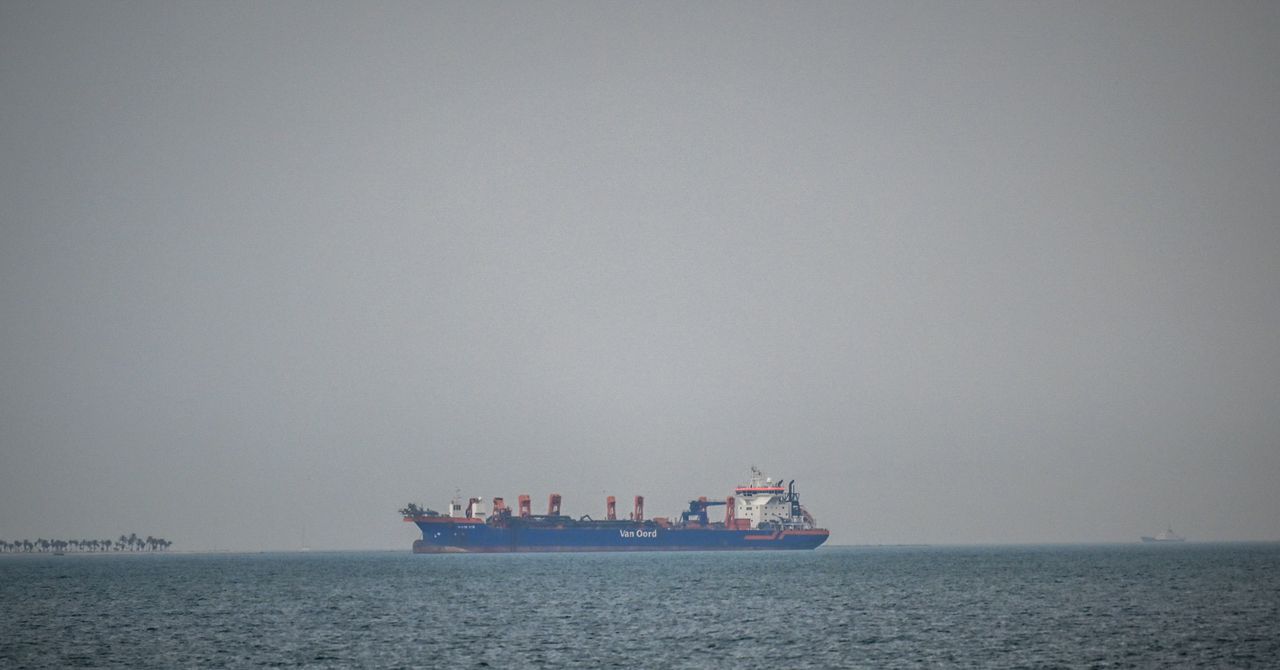
Vijay’s vessel, Mahakal, has a documented history of labor issue allegations. Maritime advocacy groups say that it is owned by a private individual and is not officially registered with the IMO. This is not an isolated case.
According to ITF, 2025 saw the highest number of ship abandonments on record, with 409 vessels reported abandoned and more than 6,200 seafarers affected globally. Over 150 of those cases occurred across the wider Middle East region. Indian nationals made up the largest group of abandoned seafarers, followed by Filipinos and Syrians.
Since the escalation of conflict in the region, ITF officials say they have received dozens of distress calls daily from seafarers, particularly those on vessels where owners have ceased communication.
In some cases, ITF documented that the machinery of the ships was destroyed, leaving them without fuel and power. “Just recently, we got a video from a seafarer that shows a missile exploding perhaps 10m away from the ship,” Canias shares.
“We’ve seen cases where ships were damaged, where crews had to abandon vessels after attacks and others where ships lost power entirely,” Canias says. “It is very dangerous for them.”
Trapped Between Systems and Conflict
For seafarers on abandoned vessels, the risks are not only physical. Isolation, uncertainty, and lack of mobility can take a significant psychological toll.
Vijay says he tries to reassure his family during phone calls, even as his situation remains unchanged. “My family is worried about me, but I try to show them I am happy,” he says. “But I am in a very depressing situation.”
He says he hopes to return home and rebuild his life. “I used to be a very happy person,” he says. “I know I can be a happy person again if I can go back to my family.”
Global shipping continues to function, even under strain, rerouting cargo, adjusting to risk and maintaining the flow of goods across regions. But for workers on vessels that fall outside those systems of accountability, movement is not guaranteed.
For seafarers like Vijay, the infrastructure that brought them there continues to operate, but without any clear way out.