
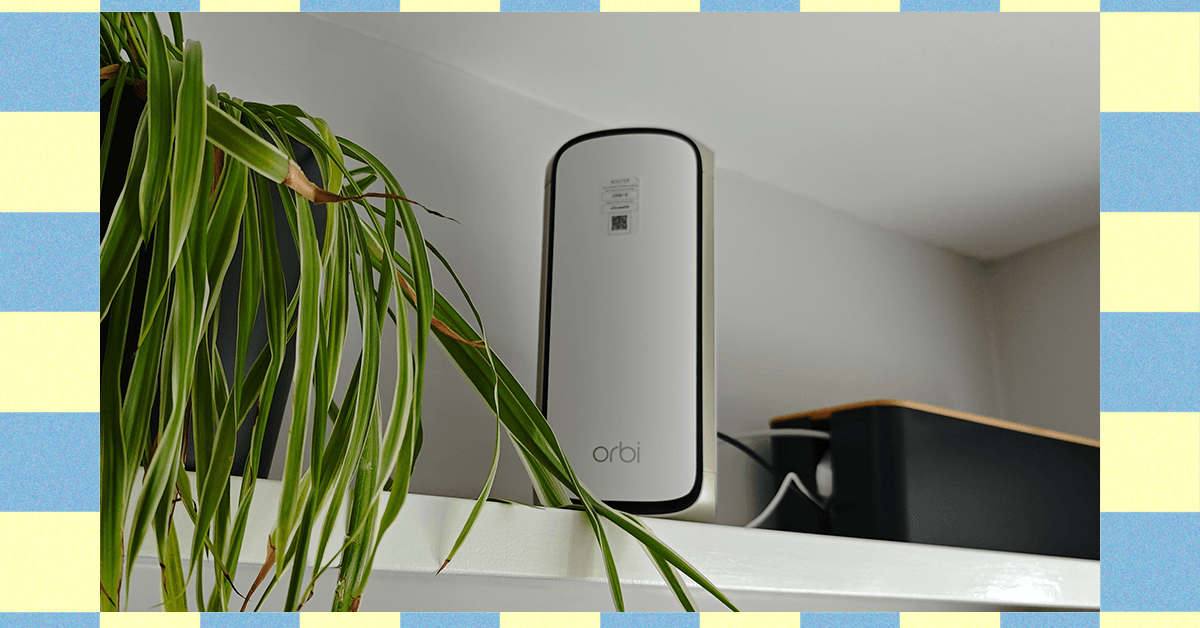
If your router has adjustable antennas, try adjusting them. You’ll be surprised how big a difference this can make. With tower routers or mesh units, the antennas are on the inside, but you can still try moving them and changing the angle to see if it improves the signal strength where you want it. A common mistake people make with mesh systems is to place nodes too far away from the main router. Think of a mesh as the backbone running through the center of your home.
Lots of things will impact signal strength if your router is too close to them. Avoid metal or concrete, fish tanks, microwaves, baby monitors, and cordless phones. It’s best not to have any other wireless devices (Bluetooth, Wi-Fi, or anything else) too close. This could be trickier in an apartment where your neighbor’s routers and devices can cause interference.
Routers are generally good at picking the best bands and channels to avoid interference, but if you think that’s your problem, you could consider splitting bands or changing channels in your router settings. You can use a Wi-Fi analyzing app (I like Netspot) to see how busy the channels in different bands are around your home.
Run a Speed Test

Photograph: Simon Hill
Sometimes sluggish performance on your network may be caused by your device. It’s worth checking the internet speed. You can simply type “speed test” into your web browser search and run one. Some routers and mesh systems also offer built-in speed tests, so you can check that your ISP is delivering the speed you are paying for.
If the internet speed appears fine, but your browser is sluggish, you may need to flush your browser cache, disable problematic plug-ins, or scan for malware.
Firmware Upgrade
It’s generally a good idea to update the firmware on your devices when updates are available, and I recommend enabling them to update automatically where possible. This is important for routers and even more so for mesh systems. Manufacturers will regularly release new firmware updates that improve compatibility and stability, and they can have a tremendous impact on your Wi-Fi performance. It’s a quick and easy thing to do in your router’s app.
Check Your Router Settings
If you’ve previously tinkered with your router’s settings, you may have changed something that is causing a problem. Have a quick look and see if there’s anything obvious you can try changing back, but don’t go tweaking settings you don’t understand. If you suspect this might be your issue, but can’t remember what to change, it could be worth doing a factory reset on your router or mesh.
Problem Devices
There are many potential issues with networking gear and the wide range of different devices you might have in your home that are trying to connect to Wi-Fi. Let’s take a look at some potential fixes if you’re struggling with a particular device.
If you’re having intermittent issues with the network slowing down. It’s worth doing a quick tally and considering which devices could be hogging your bandwidth. You can check on the network impact of different devices in your home by simply turning them off for a while, one at a time, and testing network stability and speed. Think about limiting the devices that connect to your router and reducing their bandwidth requirements where you can.
Security cameras recording 4K video to the cloud can easily slow your network to a crawl. But you can lessen the impact by turning off recording when you’re home, filtering out some events, or switching to a lower resolution.
If one device refuses to connect, double-check the network name or SSID (service set identifier) that you’re connecting to and make sure you have the right password. Here’s how to find and share your Wi-Fi password. It’s best to keep your SSID simple and avoid spaces or special characters.
If you have a device that has never been able to connect or perhaps can’t connect after you changed your router, check that the Wi-Fi standard or security settings are supported. You may have to split bands, change the security mode, or create a separate IoT network for the device to join. Many smart home devices can only connect to the 2.4-GHz band.