
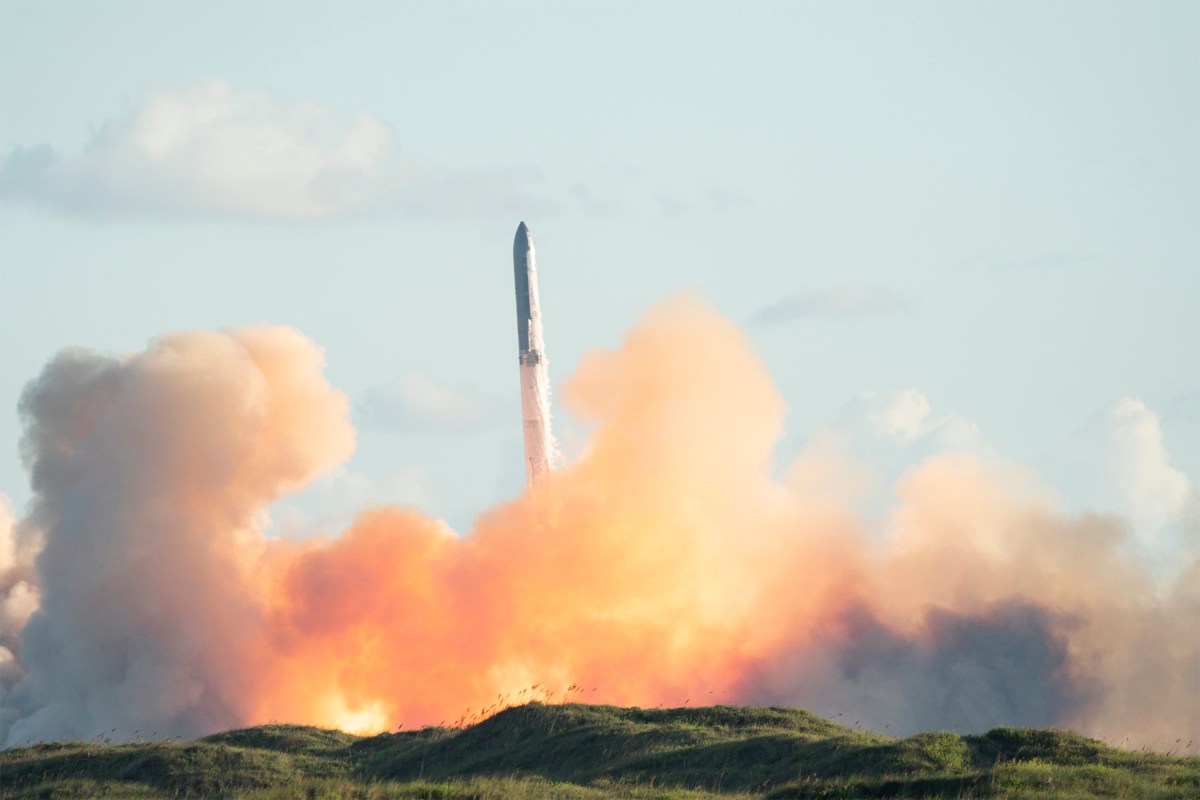
SpaceX is reportedly lining up four major Wall Street banks for a potential 2026 IPO — a move that could signal the long-awaited reopening of the public markets after a years-long IPO drought.
In the meantime, late-stage private companies like SpaceX are finding other ways to create liquidity for employees and early shareholders, largely through a fast-growing secondary market.
To unpack what SpaceX’s IPO chatter means, how private liquidity works before a debut, and what investors are looking for in today’s pre-IPO giants, we spoke with Greg Martin, managing director at Rainmaker Securities, a broker-dealer specializing in secondary share transactions for late-stage private companies.
You can listen here or wherever you get your podcasts, or read the conversation below.
This interview has been edited for brevity and clarity.
Greg, welcome to the show. Before we dive in, can you share a bit about your background?
I’m founder and managing director of Rainmaker Securities, which specializes in helping large late-stage, pre-IPO companies transact shares in the secondary market. I am also the founder of a secondary firm that buys private company shares called Archer Capital Group, and co-founder of Liquid Stock, a business that helps employees and executives exercise their options using their shares as collateral.
I’m sure the secondaries business has been booming with this IPO drought from the past couple years.
No doubt. Private companies are staying private much longer now. Many of these businesses — including SpaceX and other companies that would be top 30 in the S&P 500 — would historically have gone public years ago.
Techcrunch event
Boston, MA
|
June 23, 2026
These companies are significant in our economy, and investors really want access to these companies. At the same time, there are shareholders and executives and founders who have been in them for a long time and want to start seeing some liquidity from their shares, which are a very high percentage of their net worth.
So these two forces have created a thriving secondary market. And we only see this trend growing because more market cap is now housed in the private markets.
Do you imagine the secondary markets shifting if we have a break in IPOs this year?
It’s an interesting question, because clearly when a SpaceX goes public, you could argue that $800 billion has just left the private system and is now in the public markets. But I think it just increases interest in more companies offering liquidity, and more investors coming into private markets. While SpaceX is a one-of-kind company, there are a lot of companies that are being started today and that are growing very fast. I mean, three or four years ago, what were OpenAI and Anthropic valued at? Those are now over a trillion dollars of combined market cap.
I really see the trend of the opportunity in the private secondary spaces as growing overall, and frankly, when we see the matriculation of SpaceX to the public markets, I think it’s going to actually increase the capital market interest in private companies.
What are some things you’re noticing around the SpaceX IPO?
If you think about the IPO market the last few years, it’s been pretty dismal since 2021, so the markets are really waiting for a bellwether company. And I think SpaceX is clearly a bellwether company…and there’s a huge amount of interest in that company.
SpaceX also just did a tender at an $800 billion valuation, and we see a ton of interest on our platform at Rainmaker in continuing to buy into the secondary. And it’s not just SpaceX.
We’re seeing a lot of interest in some of the other bellwether companies, whether it’s ByteDance, whether it’s Stripe, Databricks, obviously OpenAI, Anthropic, the AI businesses, Perplexity. So there is a lot of interest, but SpaceX, I think, is the one that people are following the most closely. And I really think it could create a reset in the IPO market if it were to go public this year.
What kind of bid movement are you seeing on your platform?
SpaceX has continued to defy gravity. Even during the down periods of ‘22 and ‘23, SpaceX was the one company that continued to price up every time there was a hint of the company going public.
We have seen a significant uptick in interest, both from a size and a price point – it’s already pricing well above where the last tender round was and getting closer to that trillion and a half that they had discussed as a potential IPO price.
Elon Musk famously said he wouldn’t take SpaceX public until rockets were flying to Mars regularly. Why is he racing to the public markets now?
The company has been private for a long time, so I wouldn’t say he’s racing to go public, although his stance has shifted.
We are in a very good market, we’re at all time highs across the board. SpaceX has seen a large amount of interest in the private markets, but the private markets are constrained. Not every investor on the planet can access the private markets.
SpaceX has a huge opportunity in front of it. They dominate the rocket-launching business.
They’re building an amazing Starlink business. They have Starship, which has so many businesses related to it, whether it’s sending bulk payloads into space or logistics around the world. Now they’re talking about building data centers in space, and as a truly vertically integrated company, they can manage it.
And so it just makes sense, given the positive market dynamics and massive potential opportunity that SpaceX could address across its many business lines. Why not go and unlock all the rest of the capital markets to help them fund their businesses?
SpaceX has been traditionally pretty tight about who can join its cap table. There are a lot of national security risks so they can’t have any links to U.S. adversaries. Will opening up to the public markets affect that?
You could argue that it does open up that potential risk channel. I think if they do a public offering, it’ll probably be a sliver deal, so only 5% of their company that’s technically available. Now we’ll see what happens, but at least things will be out in the open and publicly disclosed, so they can see who owns their shares.
The question will then become, do any of these companies – even if they’re in adversarial countries – have any real control? If they’re just economic interests, that’s something that can be tolerated. The reality is, Elon and a pretty tight knit group of people will still continue to control the company.
You said it’s not a race to IPO, but it certainly feels that way now, in part because of Elon Musk’s public feud with Sam Altman who is also chasing close to a $1 trillion IPO. Altman is also looking to buy Stoke Space, while Bezos is talking about orbital data centers. A lot of rivals appear to be converging on a similar mission.
SpaceX’s success is going to breed some imitation. We’ve heard now that Bezos is going to launch a communication network to compete with Starlink, but they’re a long way behind. And OpenAI has its own set of capital risks in the core business that they have to address. So for them to go public makes a ton of sense, because the AI trade is still very hot in the public markets. They have an insatiable need for capital right now, if you look at their burn rate. So there’s no point in them constraining the investors that can access their company, because right now they need capital.
I think SpaceX can be a little more measured. They can find the right time when the market presents itself well, because they have a business that is largely profitable, and they have dominance in their two key businesses. So they’re in the driver’s seat.
If there’s any downdraft in the market, I think they’ll stay private.
It’s not all roses for SpaceX. They are facing their own challenges launching Starship V3, and several of their aircraft have exploded over the past year. But a lot of that might not matter since this is an Elon Musk company, and those tend to do well in terms of stock price just off the back of his name. How do you think the SpaceX IPO will be priced relative to what its actual balance sheet says, versus the impact of Elon Musk and his empire?
It will definitely get a premium multiple. There’s an Elon halo effect, and he’s delivered. Even though Tesla’s primary revenues come from automobiles, it’s completely vertically integrated. It captures data. It now has self-driving taxis. It has Optimus robots –
It’s got a minimal rollout of self-driving taxis and Optimus is still years away…
Robots are the future at Tesla. Tesla is really a state of the art manufacturing company, and Elon owns xAI, Twitter, SpaceX – these companies can be very virtuous.
I do think there’s a halo effect around Elon and that creates some pressure, too. So I expect he will get a premium well and above what typical market rates would be for a company like SpaceX, given their balance sheet and revenue.
I think people believe in the future of a data center in space that’s cooled by space and run by solar panels directly from the sun. I mean, it sounds crazy and pie in the sky, just like going to Mars sounds crazy and pie in the sky. But if anyone can do it, Elon’s probably the guy.
You say that, but he hasn’t actually done a lot of the weird pie in the sky stuff that he has promised to do. In fact, others have beat him to the punch, especially when it comes to full self-driving.
That will be debated by investors and will be where the tension is. When you put so much value in the belief that one person can exceed expectations continuously, that’s a big challenge. And some people will not be comfortable with that risk.
How significant is it that SpaceX is lining up banks for a 2026 IPO?
It’s a pretty big signal. I don’t think they’re just playing games.
But having a conversation with banks doesn’t necessarily mean the IPO is coming this year. What are some other signals that people could watch for when a company is getting ready to go public – not just SpaceX, but anyone?
Look at the people they hire and if that portends more of an IPO senior executive team versus an entrepreneurial team. If they seem really focused on a chief accounting officer from a public company. Or if there’s a swap out and a new CFO comes in with deep public company experience. If they’re beefing up their investor relations team, accounting, legal.
Companies like SpaceX have had public grade teams for a while, so I don’t think there’s a lot to learn there.
Zooming out a little bit, how would you say private market valuations typically compare to what companies achieve in their IPOs?
It’s a good sign for private companies to pre-understand their demand. If a company didn’t have that and they basically had to rely on a two-week marketing period from when they file publicly or if they start a road show where they only talk to top accountants, that’s often when you have a really difficult pricing environment because they’re not getting proper price discovery.
So we’re really pushing companies to actually open up your private secondary capability because it’s a great way to develop price discovery well in advance of the IPO, to start getting people attached to your business, to open yourself up to a broader investor base. That way, by the time you do go on your road show, you actually have a pretty good view of what your price should be, and you end up with a much more efficient IPO.
Think about when Figma went public and traded up 200%—that’s not really a good IPO. That’s a company that probably didn’t do very good price discovery in advance.
Walk us through how secondaries actually work. Let’s say I’m a SpaceX employee with stock options. What are my options before IPO?
All private companies are not created equally. SpaceX has very tight controls on their cap table, partially because they don’t want to exceed the number of shareholders, at which point they would have to be a public company. And so Space X, unlike most companies, runs tender offers two or three times a year, so there tends to be a reasonable amount of liquidity for employees.
Now there’s also what I would call the SPV (special purpose vehicle) world that trades in SpaceX, where people put their shares in SPVs and then trade units in their SPVs, rather than the shares themselves. So there actually isn’t a cap table change, but there is an economic ownership change by virtue of trading units in the SPV. That’s where most of the trading in SpaceX lies.
Whereas some companies allow trading of shares directly on their cap table, and some companies absolutely prohibit all secondary transactions, which I don’t think is a good idea. That’s why people work with firms like Rainmaker, because we get to know the companies. We get to know how they monitor and guard trades so we can help get those trades done. We can help provide liquidity for people who want it. We can provide either ownership of the shares or ownership in the economics of the shares for investors.
You say access to information is one of an investor’s biggest problems in the secondary markets. Does Rainmaker help provide information?
We work with some companies where we’re provided data rooms and can provide access to information. We do our own research on anything publicly available and have a view of supply and demand dynamics. So we have a lot of information we can provide, but we can’t share inside company information unless the company allows it. Increasingly, we’re helping companies with those processes. The more information we can provide, the lower the risk for investors, and that tends to open up markets. But it’s an evolving process. These are private companies for a reason—they’re guarded with what they want to share, and we’re very respectful of that.
What are sophisticated investors looking for when they buy pre-IPO shares at this scale?
Just like a traditional investor, they would want to be able to do their due diligence across financials, across management. They certainly would like an understanding of the cap table – like how many shares are outstanding, what’s the preferences? What does this price represent? What’s the debt? They would love to understand what the supply and demand equilibrium is like.
The more they have, the better. That’s why they’re more comfortable with more public-facing private companies, like SpaceX – even without exact historical financials – than the less well-known names.
Are you seeing more of an appetite for buying secondary shares from other late-stage unicorns? What companies would you point to?
We continue to see substantial demand for companies like Databricks, Stripe, OpenAI, Anthropic, xAI, ByteDance. The AI trade continues to be strong, whether it’s Lambda Labs or Cohere, which is a Canadian company near and dear to my heart.
As companies signal they’re going to go public – like Discord, Motive, Canva – people get a feeling that there’s going to be liquidity, and that’s when we start to see things open. There are probably 20 to 30 companies on our platform that trade pretty regularly, and that just continues to grow. As the IPO market starts to open up, we’re going to see that broaden.
Like in 2021, we were trading hundreds of companies, and then as the IPO market closed, and that number compressed. But last year was our biggest year – we were trading over $1 billion worth of secondaries.
Where can our listeners connect with you online?
I’m on LinkedIn. They can come visit my website, at Rainmakersecurities.com if they’re looking to sell shares, they could come to archercapg.com. If they’re looking to exercise their options, they could come to liquidstock.com.